
Building companies is a capability, not an asset class.
We are an operating owner. We build companies, take ownership in them, work alongside the people who run them — and we stay.
One family. A hundred forms. Nothing in common but how they grow.
In 1735 Linnaeus named this flower after Proteus, the god who could take any shape he chose. He had seen only drawings of the plant, but the name held: the genus runs to more than a hundred species that share almost no resemblance.
There is a second half to the myth that we like better. Proteus knew the answer to any question you brought him — but he would change form again and again to avoid giving it. The only way to get what you came for was to hold on.
That is the whole of our model in one sentence. Advice is easy to obtain. Capital is easy to obtain. What is scarce is the partner who stays long enough for the answer to arrive.
Five things build a company. No model carries all five.
| Model | Capital | Capability | Risk | Accountability | Time |
|---|---|---|---|---|---|
| Venture capital | |||||
| Private equity | |||||
| Consulting | |||||
| Holding companies | |||||
| Protea Capital Partners |
We did not set out to build a better fund. We set out to build the row that was missing.
Every conventional capital model organises itself around an asset. Venture capital around technology equity. Private equity around mature cash flows. Property funds around land.
In each of them the sector is the constant and the capability is bought in — a consultant, an operating partner, an interim executive, hired for a season.
We do it the other way round. The capability is the constant. The sector is the variable.
Building a sales function, hiring a leadership team, professionalising operations, opening a second market, holding a margin under pressure — none of that dissolves at a sector boundary. The specifics change entirely. The structure of the problem does not.
We do not invest in industries. We invest in the ability to build and run companies, and we apply it wherever it changes the outcome.
Build
We create companies from opportunities, ideas and entrepreneurial talent — putting in the first capital, the first systems and the first hires, alongside the person who will carry it.
Run
We build the teams, systems, processes and operating capability a company needs to be excellent rather than merely busy. This is the part almost no owner does, and the part that decides everything.
Scale
We turn a good business into a durable one: second site, second market, second country, the acquisition, the leadership bench deep enough to outlast its founder.
We exist to make entrepreneurship less lonely.
The entrepreneur awake at three in the morning because no one else can make that call is not a law of nature. They are a design flaw in the way companies are financed. We built Protea to remove it.
Europe and Africa. Not two markets — one corridor.
Europe has operating discipline, deep management talent and a generation of owner-led companies reaching succession without a successor. Africa has growth rates Europe has not seen in forty years and a shortage of the institutional capability that turns growth into durability.
We work across both because the same capability is scarce on both sides, and because the traffic runs in both directions. The geography is not the thesis. The capability is the thesis.
If you are building something you intend to keep, we should talk.
Capital was never the missing piece.
Four beliefs, and the observation that produced them.
We spent years around private equity, consulting and the companies they served. The same scene repeated itself with a regularity that stopped being coincidence.
A capable owner. A business with more in it than anyone was getting out. Access to money, access to advice, access to recommendations. And no one who would stay to do the work.
Our first answer was to find people — an executive search practice built to place the missing leader. It worked often enough to teach us why it wasn't enough. One outstanding hire into a company without systems, capital or patience is a person set up to fail.
The missing link was never a person. It was a system: ownership, capability, capital, accountability and time, held together by the same party.
Nobody was selling that. So we built it.
Venture capital is a variance model. It buys options on extreme outcomes, which requires many bets, short holding periods relative to how long companies actually take, and a definition of success set by the capital market rather than the business. It can finance speed. It cannot manufacture it.
Private equity is an optimisation model. Exceptionally good at extracting more from something that already works — and by design it arrives only once the entrepreneurial risk has been taken. It buys outcomes. It does not create them.
Consulting is judgement without consequence. The best in the field walks out of the building on the day execution begins, and is paid regardless of what becomes of the advice.
Holding companies own without transferring capability. They allocate capital between businesses and are usually better the less they interfere inside them.
None of this is a criticism of the people in those models. It is arithmetic. A partner carrying twenty-five positions has, roughly, nine working days a year for each one. That is enough to monitor. It is not enough to build.
Capability, not sector
The ability to build teams, create demand, professionalise operations and develop leaders transfers between industries. The company changes; the capability does not. This is why our companies will never look alike.
Time is a factor of production
Almost every serious mistake in company building is a timing mistake — scaled too early, decided too late, sold too fast. Most of them are not caused by the business. They are caused by a clock somebody else set. Our capital is permanent. There is no exit clock.
Capital without execution is incomplete
Money accelerates what already exists. It does not create the machinery required to build. Where the foundation is wrong, capital only makes the error arrive sooner.
Entrepreneurs remain entrepreneurs
We do not acquire people. We do not install ourselves above them. Whoever runs a company in this group runs it, holds equity in it, and is a partner rather than an employee of their own idea.
Every real offer has a price. Here is ours.
We are partners, not silent shareholders. We hold opinions and we bring them. We take board positions and we use them. If what you want is capital that stays out of the way, a bank will serve you better and cost you less.
And for investors: this is a capability risk, not a market risk. It stands or falls on the quality of the people doing the building. That is less comfortable than a sector thesis. It is also the only part that cannot be copied.
An owner that comes with hands attached.
Build. Run. Scale. Held together by permanent capital and operating ownership.
Build
We identify an opportunity, develop the model, put in the first capital, fill the first key roles, and find the entrepreneur who will carry it. They receive equity, not a job.
Partner
We take ownership positions in existing companies — minority or majority, in growth or in succession. What separates us from a financial investor begins the day after closing.
Scale
We fund and work through expansion: the second site, the second market, the second country, the acquisition, the new channel. This is where the platform has the most leverage, because we have made most of these moves before.
What a group can share that a company cannot buy.
Every company in the group draws on the same infrastructure. Its value is not that it exists — it is that it is used more than once. Each company inherits the mistakes the others already made.
| Layer | What is shared | What changes inside the business |
|---|---|---|
| Capital | Equity, growth funding, access to debt | The ability to act without waiting on a funding round |
| People | Recruiting, executive access, compensation design | The decisive hire lands months earlier |
| Market | Sales, marketing, pricing, brand | Demand becomes predictable rather than accidental |
| Operations | Process, procurement, quality, expansion playbooks | Mistakes are made once, not once per company |
| Control | Finance, reporting, legal, compliance | Early warning instead of year-end surprises |
| Technology | Systems, data, automation | Scale advantages without scale |
| Network | Experts, customers, partners, the group's other founders | The shortest route to an answer is a phone call |
No fund. No term. No obligation to sell.
We hold indefinitely, reinvest the cash flows of existing companies into new ones, and sell only when a sale is right for the business rather than for a calendar.
This is not a romantic position. It is the hardest economic decision in the model: it trades near-term distributions for compounding, and it asks our investors to accept the same patience we ask of our companies.
It also buys something no fund can offer. Permanent capital can act when others are forced to — it buys in the years when everyone else is selling, and it never has to take a bad price because a fund is closing.
Decide locally. Enable centrally.
Conglomerates failed because a head office made decisions about businesses it did not understand. We centralise capability and leave the decisions with the people running the companies. That is not the same idea renamed — it is the inverse of it.
The line matters enough that we write it into both the shareholder agreements and the way we behave. Where it blurs, this model loses its justification.
The platform is only worth what it does inside a company.
Companies built with conviction, capability and time.
Our companies operate across different sectors and markets. What connects them is not what they do. It is how they are built.
Different companies. Different industries. One shared way of building.
Where the capability is at work.
 German-speaking Europe

Fynbos Advisors
A search boutique for the consulting and transformation world — built on the conviction that the old headhunting model no longer fits how careers and leadership roles actually work.
Visit ↗ Germany & Luxembourg

AlpenGuard
Compliance made reachable for the companies the consultancies overlook — ready-built cybersecurity and data-protection documentation for SMEs, where a full advisory engagement was never an option.
Visit ↗ South Africa

Table Bay Capital
Our operating home in Africa. Table Bay Capital is how the group works on the ground across the continent — the other half of the Europe–Africa corridor, close to the companies we build there.
Visit ↗Two Oceans Business Services
The invisible engine. Two Oceans runs finance, IT, security and executive support from South Africa — one professional backbone, so the businesses it serves can focus on their markets instead of their admin.
In formationClubhouse Group
The upgrade without the overhead. Clubhouse equips sports, leisure and entertainment venues with state-of-the-art infrastructure and keeps it running, so operators can grow what they offer without managing the technology behind it.
In formationMore to come
We add companies deliberately — a few at a time, each one held for the long term rather than counted toward a total.
—We present our companies the way we think about them, which is not the way a portfolio is usually presented. We do not lead with holdings, entry multiples, exits or returns. Those are facts about us. They are not facts about the company.
What matters to us about each business is the part a balance sheet never shows: who built it and what they were trying to do, what potential was in it that capital alone would not have released, and what we build, run and scale alongside them.
We do not collect stakes. We build companies.
The companies may look different from the outside. Behind them is the same belief: enduring businesses are built through ownership, capability and time.
Entrepreneurs backing entrepreneurs.
A model built on capability has to answer one question before any other: whose?
Most capital firms put the team page last, because the thesis is meant to carry the weight. Ours cannot. If building companies is a capability rather than an asset class, then the only real question an investor or a founder can ask is who holds that capability and what they have built with it.
So we answer it directly. Not titles and firm logos — what each of us has actually built, run and scaled, including the parts that did not work.
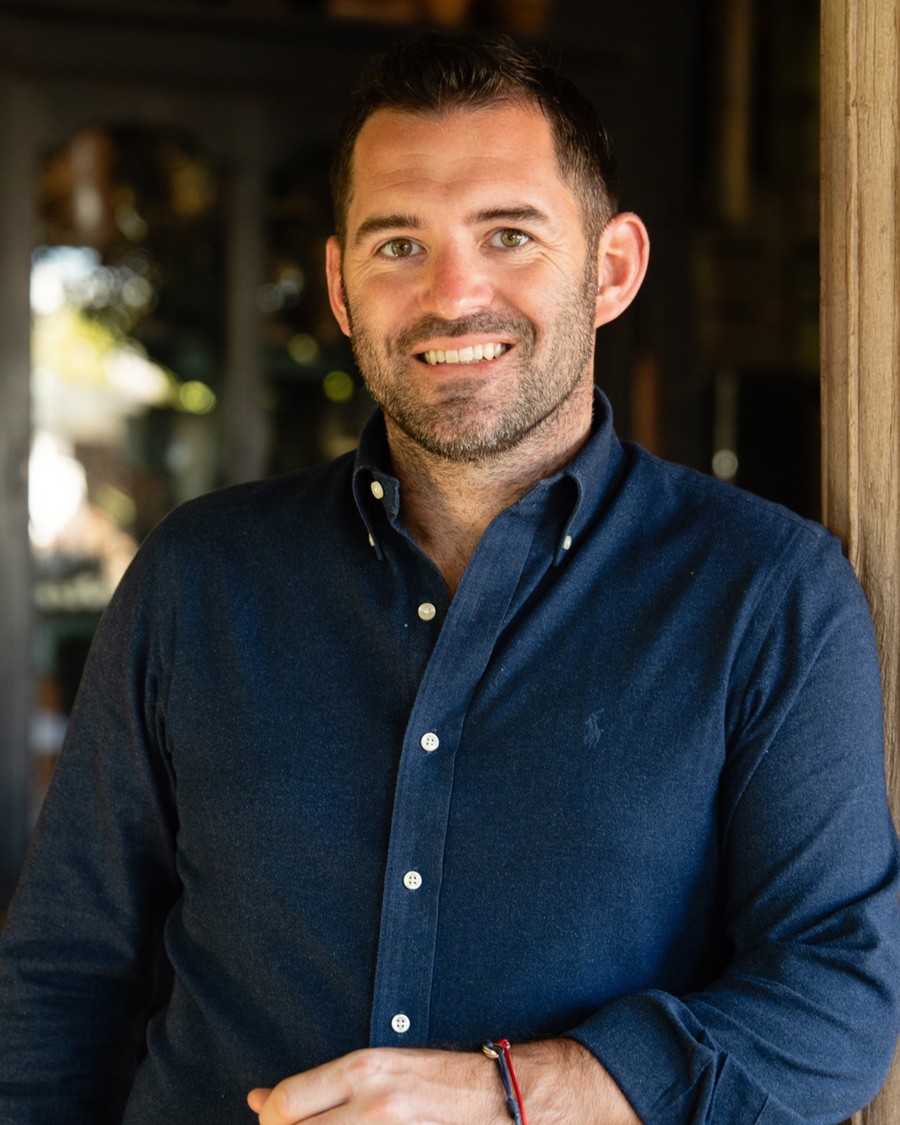
Martin Fahnauer
After a decade in management consulting, Martin moved into executive search in 2021, rising quickly to Partner and Managing Director. In 2024, driven by a conviction that executive search needed to be thought about differently, he founded Fynbos Advisors.
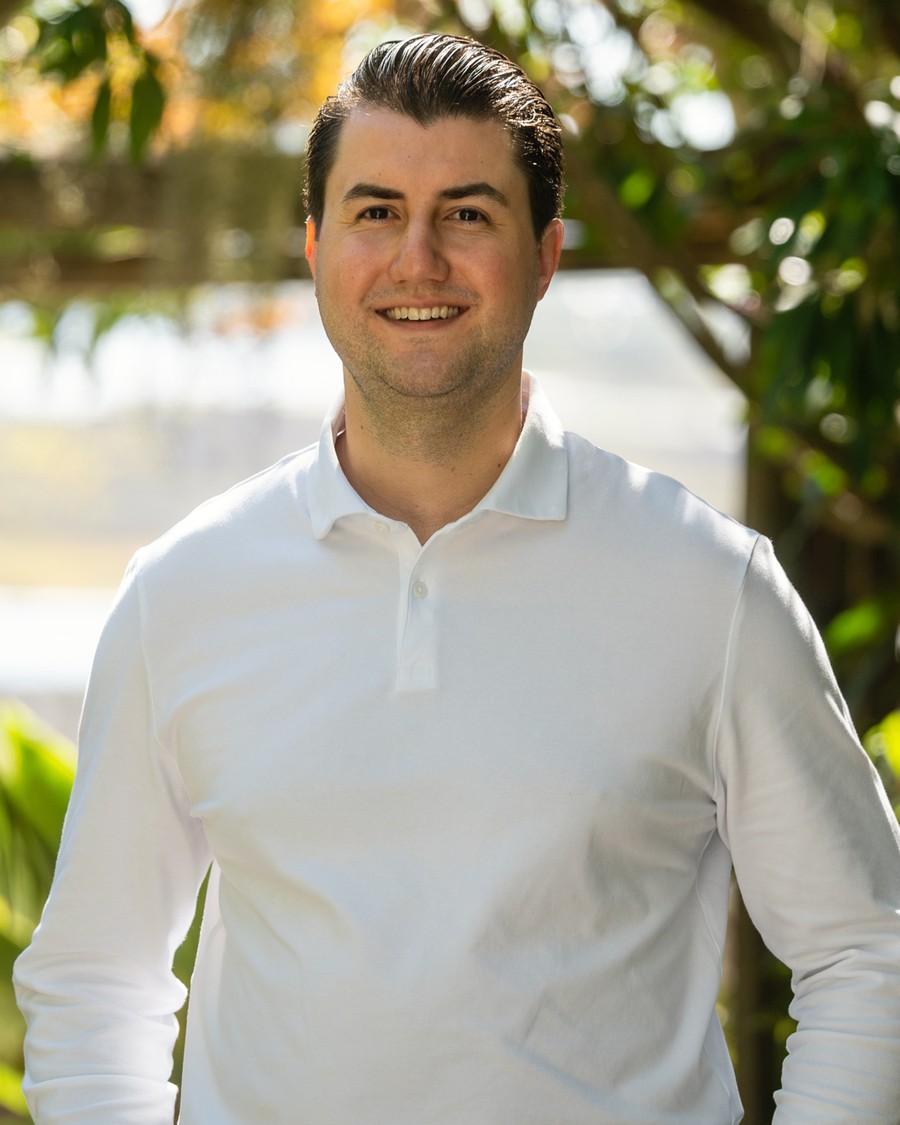
Ben Wirtz
His business partner and longtime friend Ben joined him shortly after founding. He also came from a traditional executive search firm, and before that worked in technology-focused management consulting — giving him a strong grounding in new technologies and modern ways of working.
If you are building something you intend to keep, we should talk.
Three reasons to write to us.
Tell us which one you are. It changes who reads it and how fast we answer.
I am building a company
You run something with more in it than you are currently able to get out, and you would rather have a partner than a lender or a buyer.
- Founder-led businesses
- Companies at a growth ceiling
- Owners approaching succession
- Builders starting something new
I invest for the long term
You are looking for returns that come from companies getting better rather than from repricing, and your horizon is measured in decades.
- Families and family offices
- Entrepreneurs with realised capital
- Institutions comfortable without a fund term
I am considering selling
You have built something you care about and you would rather it continued than be optimised, packaged and sold again in five years.
- Owner-led companies in succession
- Carve-outs and management buy-outs
- Businesses seeking a permanent home
One inbox. A partner reads it — whichever of the three you are.
partners@proteacapital.euA partner reads it — not an inbox. If there is something in it, we will suggest a conversation within a week, and we will tell you plainly if there is not.
We do not run a process, we do not ask for a deck before we have spoken, and we do not use exclusivity to buy ourselves thinking time.
Imprint
Protea Capital Partners GmbH i. G.
Frankfurter Straße 69
63263 Neu-Isenburg
Germany
Vertreten durch die Geschäftsführer
Martin Edward Fahnauer
Benjamin Wirtz
Kontakt
Telefon: +49 173 520 5698
E-Mail: partners@proteacapital.eu
Registereintrag
Die Gesellschaft befindet sich in Gründung (i. G.). Die Eintragung in das Handelsregister sowie die Handelsregisternummer und das zuständige Registergericht werden nach Abschluss der Eintragung ergänzt.
Verantwortlich für den Inhalt nach § 18 Abs. 2 MStV
Martin Edward Fahnauer, Anschrift wie oben.
Haftung für Inhalte
Die Inhalte dieser Website wurden mit größtmöglicher Sorgfalt erstellt. Für die Richtigkeit, Vollständigkeit und Aktualität der Inhalte können wir jedoch keine Gewähr übernehmen. Als Diensteanbieter sind wir für eigene Inhalte auf diesen Seiten nach den allgemeinen Gesetzen verantwortlich.
Haftung für Links
Unser Angebot enthält Links zu externen Websites Dritter, auf deren Inhalte wir keinen Einfluss haben. Für die Inhalte der verlinkten Seiten ist stets der jeweilige Anbieter oder Betreiber der Seiten verantwortlich.
Urheberrecht
Die durch die Seitenbetreiber erstellten Inhalte und Werke auf diesen Seiten unterliegen dem deutschen Urheberrecht. Beiträge Dritter sind als solche gekennzeichnet.
Privacy
Verantwortlicher im Sinne der DSGVO
Protea Capital Partners GmbH i. G.
Frankfurter Straße 69, 63263 Neu-Isenburg, Germany
E-Mail: partners@proteacapital.eu
1. Allgemeines
Wir nehmen den Schutz Ihrer personenbezogenen Daten ernst und behandeln sie vertraulich sowie entsprechend den gesetzlichen Datenschutzvorschriften (DSGVO) und dieser Datenschutzerklärung. Diese Website verarbeitet personenbezogene Daten auf ein technisch notwendiges Minimum beschränkt.
2. Server-Logfiles
Beim Besuch dieser Website werden durch unseren Hosting-Provider automatisch Informationen erfasst, die Ihr Browser übermittelt (Server-Logfiles): Browsertyp und -version, verwendetes Betriebssystem, Referrer-URL, Uhrzeit der Serveranfrage und IP-Adresse. Rechtsgrundlage ist Art. 6 Abs. 1 lit. f DSGVO (berechtigtes Interesse an einer sicheren und stabilen Bereitstellung der Website).
3. Hosting
Diese Website wird bei der IONOS SE, Elgendorfer Straße 57, 56410 Montabaur, Deutschland, gehostet. Mit dem Anbieter besteht ein Vertrag zur Auftragsverarbeitung (AVV) gemäß Art. 28 DSGVO. Der Anbieter verarbeitet die Daten ausschließlich in unserem Auftrag.
4. Kontaktaufnahme
Wenn Sie uns per E-Mail kontaktieren, verarbeiten wir Ihre Angaben ausschließlich zur Bearbeitung Ihrer Anfrage. Rechtsgrundlage ist Art. 6 Abs. 1 lit. b DSGVO (vorvertragliche Maßnahmen) bzw. lit. f DSGVO (berechtigtes Interesse an der Beantwortung Ihrer Anfrage).
5. Schriftarten
Diese Website verwendet lokal gehostete Schriftarten. Beim Aufruf der Seiten wird keine Verbindung zu Servern Dritter aufgebaut; es werden keine personenbezogenen Daten an Anbieter von Schriftarten übermittelt.
6. Cookies und Tracking
Diese Website verwendet keine Cookies zu Analyse- oder Marketingzwecken und bindet keine Tracking- oder Analysedienste ein.
7. Ihre Rechte
Sie haben das Recht auf Auskunft (Art. 15), Berichtigung (Art. 16), Löschung (Art. 17), Einschränkung der Verarbeitung (Art. 18), Datenübertragbarkeit (Art. 20) und Widerspruch (Art. 21 DSGVO). Ferner steht Ihnen ein Beschwerderecht bei einer Datenschutz-Aufsichtsbehörde zu.
8. Aktualität
Diese Datenschutzerklärung wird angepasst, sobald sich die Datenverarbeitung auf dieser Website ändert.